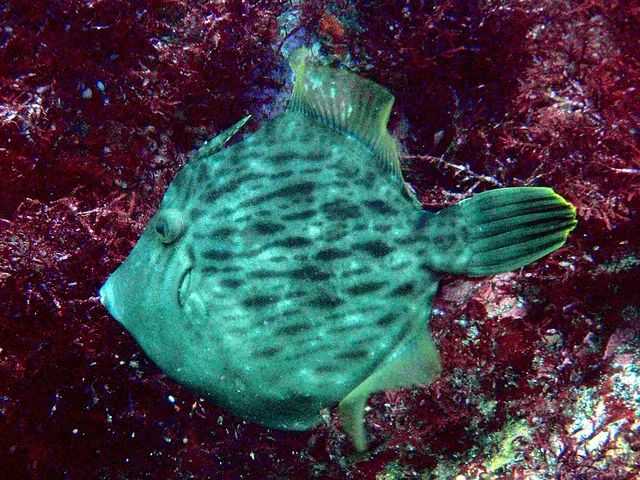
The threadback filefish features a compressed, oval body covered in small, rough scales that give it a sandpaper-like texture—an adaptation that inspired its nickname "filefish." Growing up to 25 centimeters in length, it displays a striking color palette: a silvery-white underside contrasts with a tan or olive-brown dorsal surface, often adorned with faint dark spots or bands. The most notable feature is the first dorsal fin, which in males extends into long, filamentous rays resembling trailing threads or antlers, especially during the breeding season. These filaments, which are shorter or absent in females, serve both as a visual display for attracting mates and as a form of camouflage among seaweed or floating debris.
In its natural habitat, Stephanolepis cirrhifer frequents shallow, inshore areas such as sandy bottoms, seagrass beds, and the vicinity of coral reefs, typically at depths of 10–50 meters. It is a benthic feeder, using its small, protrusible mouth to scrape algae, small invertebrates, and detritus from the ocean floor. During the day, it often rests motionless on the seabed, relying on its cryptic coloration to avoid predators. When threatened, it can rapidly retreat into crevices or use its dorsal spine to lock itself in place, making it difficult for predators to dislodge.
Despite its adaptability, the threadback filefish faces challenges from overfishing, particularly in regions where it is targeted for its firm flesh and use in local cuisines. Its slow growth rate and specific habitat requirements make it vulnerable to population declines. Additionally, coastal development and pollution degrade the seagrass and reef ecosystems it depends on. Conservation efforts, including the establishment of marine protected areas and sustainable fishing regulations, are crucial to safeguard this unique species. As a key component of coastal food webs, Stephanolepis cirrhifer highlights the interconnectedness of marine life and the importance of preserving the delicate balance of our oceans.